About MOVE.B
Embedded systems training and consulting for engineering teams: processors, SoCs, DRAM memories and connectivity standards, taught by engineers.

Embedded systems training and consulting for engineering teams: processors, SoCs, DRAM memories and connectivity standards, taught by engineers.
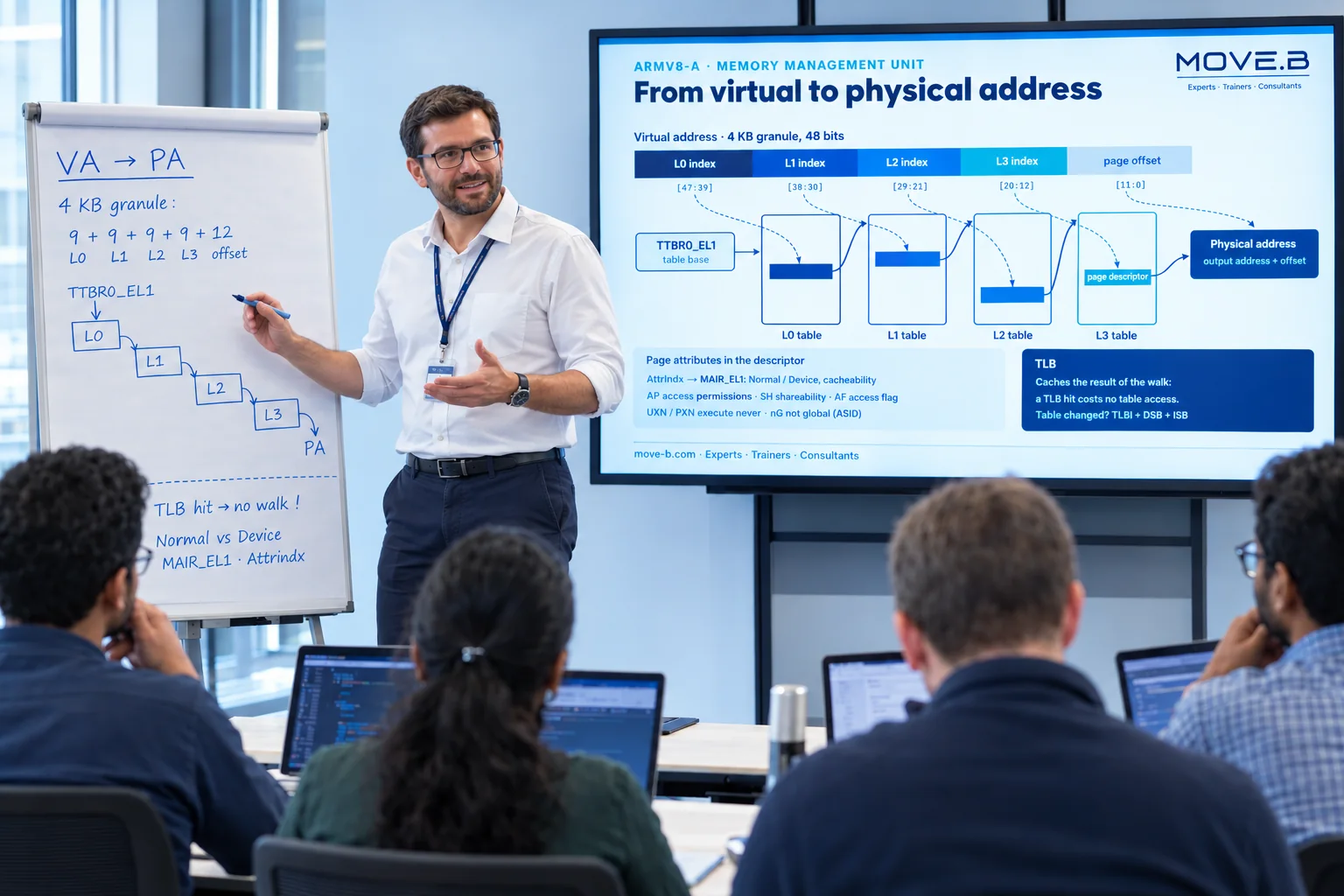
MOVE.B is a French company specialised in embedded systems training and consulting. Our trainers are engineers who have worked on processors, systems-on-chip and connectivity standards for over three decades: they teach the teams who design SoCs as well as the teams who develop boards and low-level software on them.
30+
years of work on processors, SoCs and connectivity standards
Arm, RISC-V
Arm Approved Training Partner, RISC-V Training Partner, and partner of NXP, ST and Texas Instruments
On-site
courses usually at your premises, for small or large groups, tailored to your project
Registered
training organisation in France (no. 119 222 536 92); a certificate of completion for each attendee
What we do
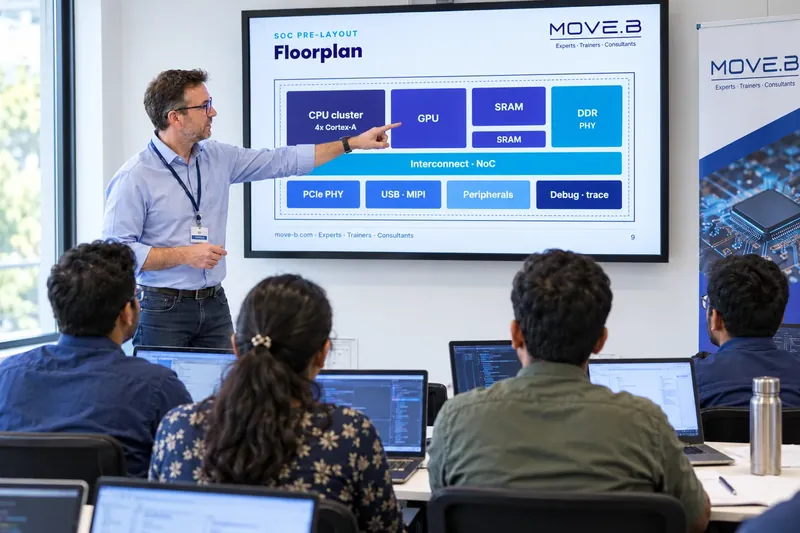
Processors and SoCs, DRAM memories, connectivity standards, networks and embedded programming.

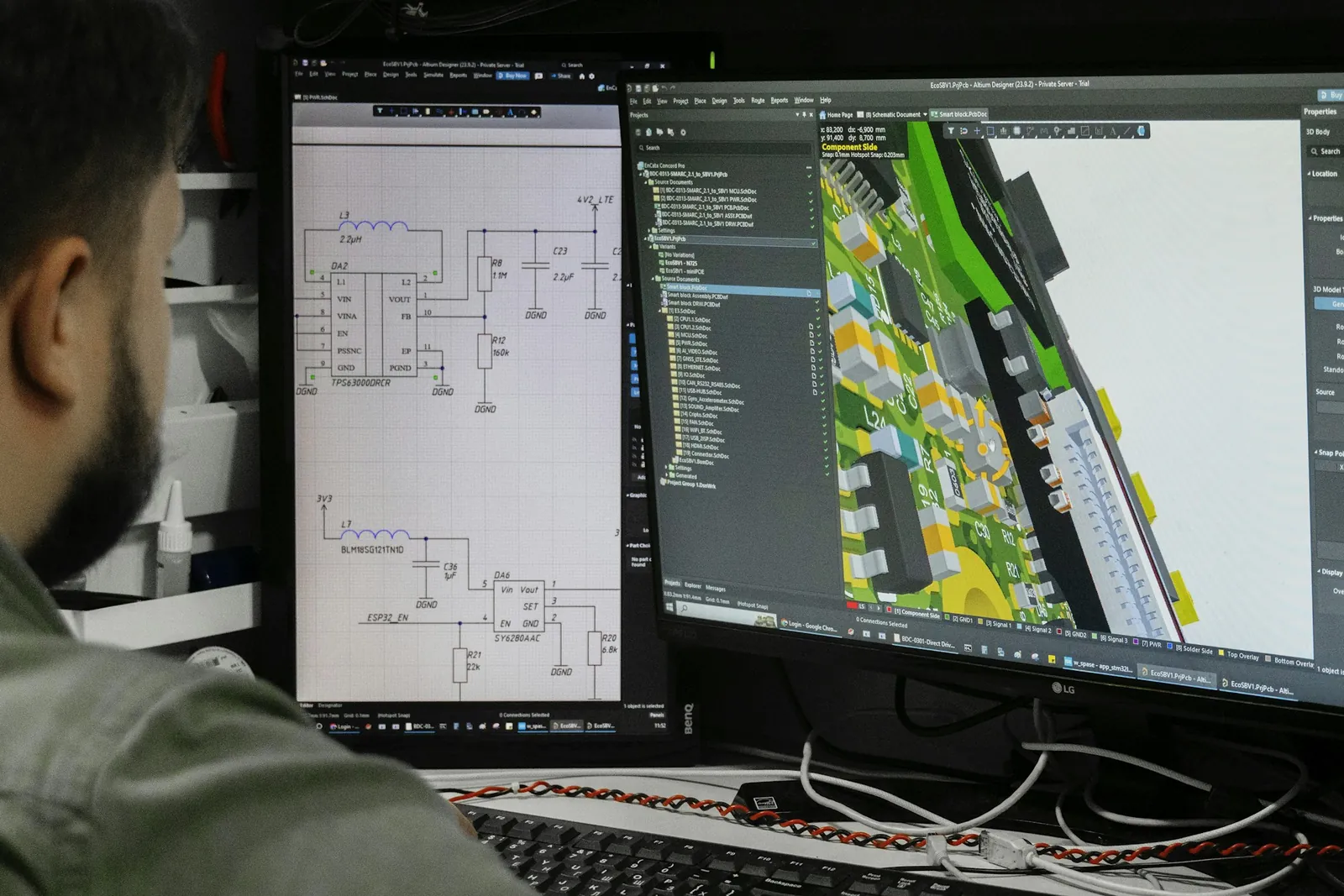
Schematics and pre-layout reviews, board bring-up, boot software, drivers and real-time kernels, troubleshooting and performance tuning.
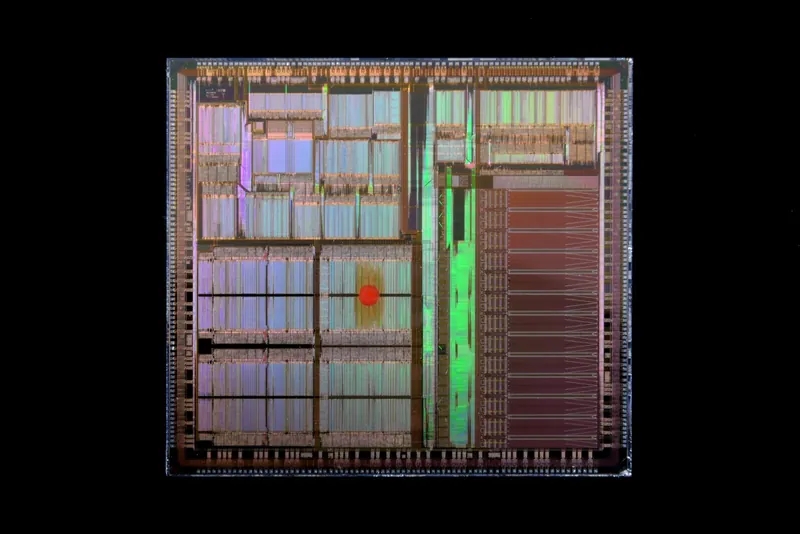
Records the execution of an Arm SoC with its on-chip CoreSight trace, from your firmware, without a probe, for post-mortem analysis.
Our team

Founder, trainer and expert
Guillaume founded MOVE.B in 2016, after more than 20 years of designing and teaching courses on processors, their interfaces and memory controllers, from PowerPC to Arm. Engineer from ENSEA.

Embedded consultant and software developer
Gabriel joined MOVE.B in 2024, coming from critical avionics software. At MOVE.B: development of ChipTrace, our trace product for Arm SoCs, and consulting projects (boot and low-level software, debugging, real-time software). Engineer from ESIEE Paris.
Why MOVE.B
Our trainers design and debug embedded systems themselves, and share the pitfalls they met.
Training catalogue
Our training catalogue covers the hardware and software of an embedded system, from the silicon up: Arm, RISC-V, NXP, ST, TI, Intel, Marvell and AMD processors, DDR, LPDDR and HBM memories, PCI Express, CXL, USB, MIPI and storage interfaces, Ethernet and TSN, embedded C.
Training courses on Arm Cortex-A/R/M and Neoverse, NXP, STMicroelectronics, TI, Intel, Marvell, AMD and RISC-V processors: architecture, SoC integration and low-level software.
AMD SoCs · Arm CPUs and related technologies (SMMU, AMBA, CoreSight) · NXP CPUs, MCUs and MPUs · STMicroelectronics MCUs · Texas Instruments Arm and DSP MCUs & MPUs · Intel Host Processors · Marvell Embedded Processors · RISC-V Processors
See the courses →Training courses on PCI Express, CXL, USB, MIPI, display, storage, automotive and avionics buses, explained from the specification to the silicon: protocol layers, PHYs and controllers.
MIPI PHYs · General purpose buses · Multimedia interfaces · Mass Storage interfaces · Avionics & Automotive buses · RF Networks
See the courses →Training courses on Ethernet, Time-Sensitive Networking (TSN), IEEE 1588 PTP, AFDX (ARINC 664 Part 7) and Marvell switches: the standards and their hardware and software implementation.
Network standards · Marvell Ethernet Switches & Routers
See the courses →Training courses on DDR, LPDDR and HBM memories: architecture, commands, initialisation and training, timings and memory controller design, generation by generation.
HBM memories · DDR memories · LPDDR memories
See the courses →Embedded C training courses on the toolchains your team already uses (Eclipse IDE / GCC, IAR, Keil): the C language applied to microcontrollers, memory, interrupts and optimisation.
See the courses → Custom courseTell us which device or standard your team works on and we will write a course for it.
Ask for a custom course →Excellent training whether this is from the course materials or from the experience sharing standpoint.
Very complete training and presentation, very good overall knowledge of ZigBee, very good background of the trainer.
The trainer's knowledge throughout the entire protocol along with the practical case studies.
Particularly appreciated: areas of attention, pitfalls, and shared experience of the LX2160.
It covered the most important architecture specific features to begin the development without having to read through all the documentation without support.
Valuable proficiency with the subject matter, very good explanations of the slides with practical examples.


A course for your team, a design review or a ChipTrace demo: write to us and an engineer will answer.