Embedded Systems Consulting
Board design reviews, bring-up, boot software, drivers and real-time kernels: the engineers who teach these devices support your project.

Board design reviews, bring-up, boot software, drivers and real-time kernels: the engineers who teach these devices support your project.

MOVE.B supports the teams who design embedded boards and their low-level software, from the first schematic to production. Our consultants are the engineers who teach our processor, memory and connectivity courses: they know the devices, their errata and the problems met on real projects.
MOVE.B is a member of PCI-SIG and of the MIPI Alliance: see the PCI-SIG member companies and the MIPI member directory.
What we do
When a system crashes, hangs or misses its deadlines, we analyse it with you, hardware and software together, from the bus transactions to the code. We tune its performance (caches, memory, interconnect, interrupts) and write the test software that validates the result. On Arm SoCs, ChipTrace records the execution with CoreSight to find the cause of rare failures, even in the field.
An outside view at the key moments of a project: choice of a processor or an SoC, architecture of a board or a system, review of a design or of a project in difficulty.
Our DDR expertise
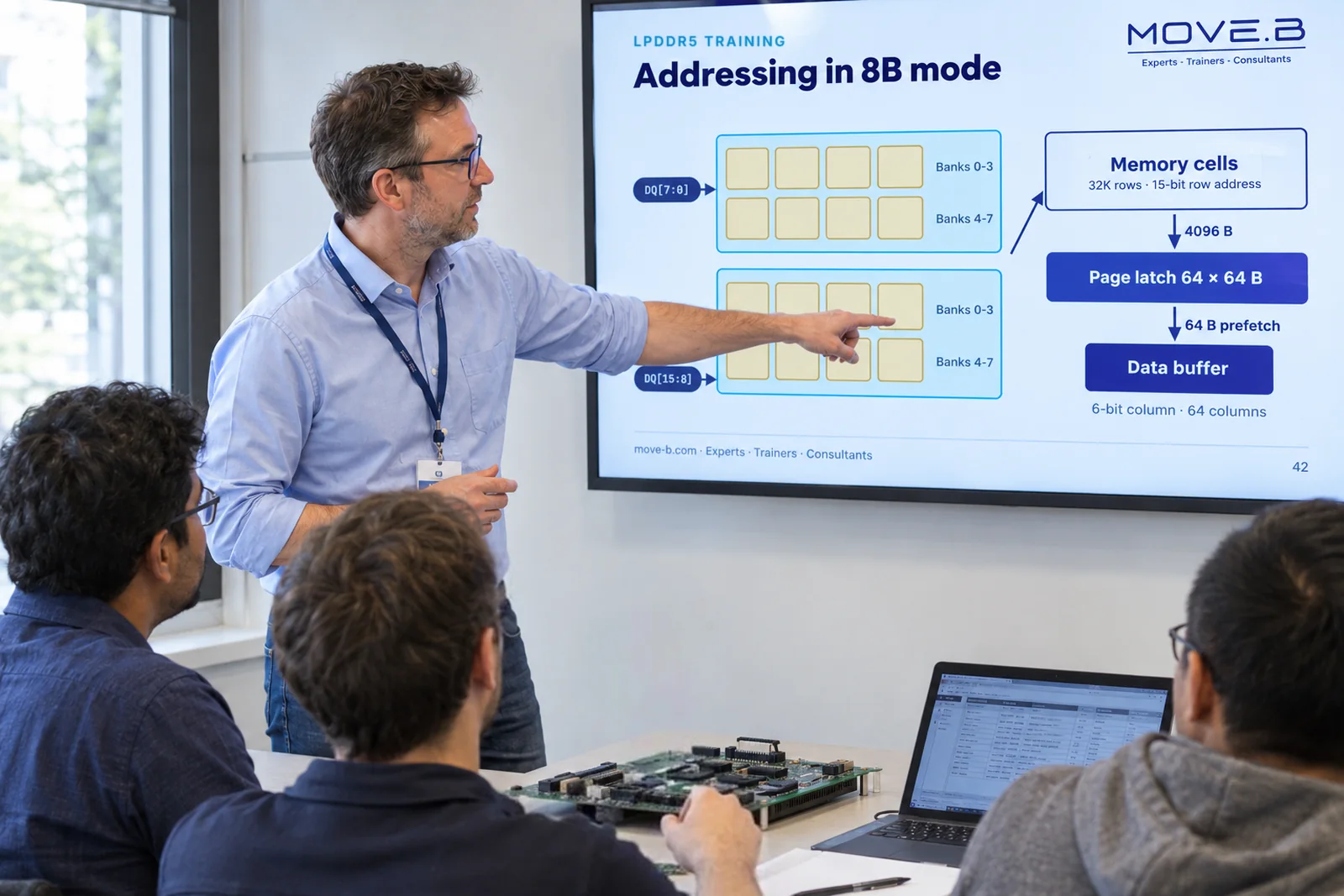
The engineers who bring up your DDR interface are the trainers of our DDR, LPDDR and HBM courses: the JEDEC standards, the initialisation of the memory, its training and its calibration are what they teach to the teams who design SoCs, memory controllers and boards.
How a project runs
01
You describe the device and the problem, through the contact form or by email: an engineer answers.
02
We agree on the scope: what is reviewed, written or measured, and what you receive.
03
Our engineers work with your team, on your schematics, your boards and your code.
04
You receive an expertise report at the end of every assignment, and your team can be trained on the same device.
Consulting and training together
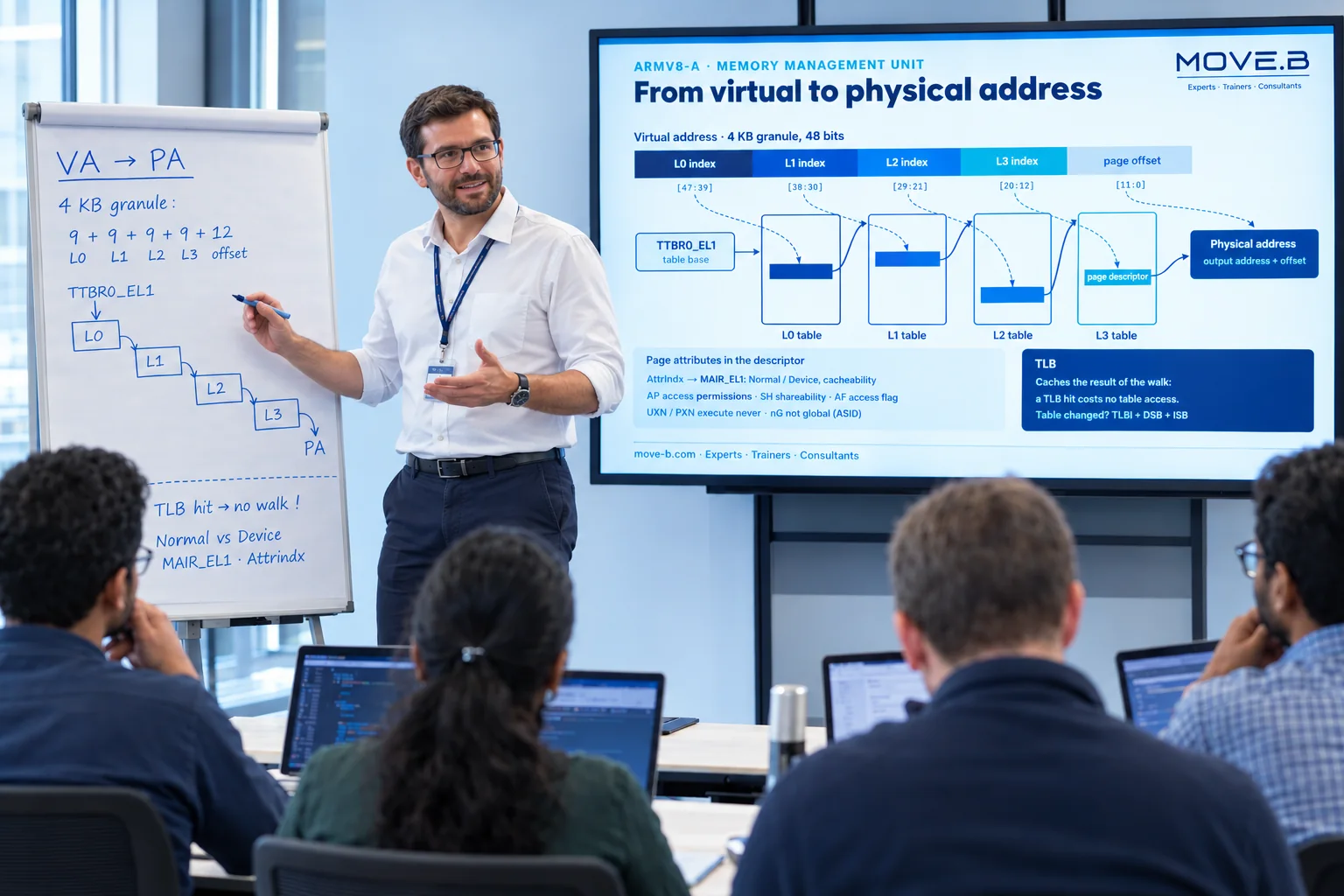
Our courses are tailored to the device of your project.
Arm Cortex-A, Cortex-R and Cortex-M SoCs, NXP i.MX, Layerscape, QorIQ and S32, Power Architecture, STM32 and Texas Instruments devices, and the DDR3 to DDR5, LPDDR4 to LPDDR6, PCI Express, USB and Ethernet interfaces around them.
Yes: they are the trainers of our processor, memory and connectivity courses, and the course can be tailored to the device of your project.
On Arm SoCs, ChipTrace keeps the execution history of every core on the board, with no probe attached: the last moments before the fault are read back and analysed.
Tell us about your device and your question on the contact page: an engineer answers.
A course for your team, a design review or a ChipTrace demo: write to us and an engineer will answer.